
Content restructured for AI answer engines turned three key pages into the source AI assistants cite for marina valuation, sale, and purchase questions
The Client: National Marina Sales
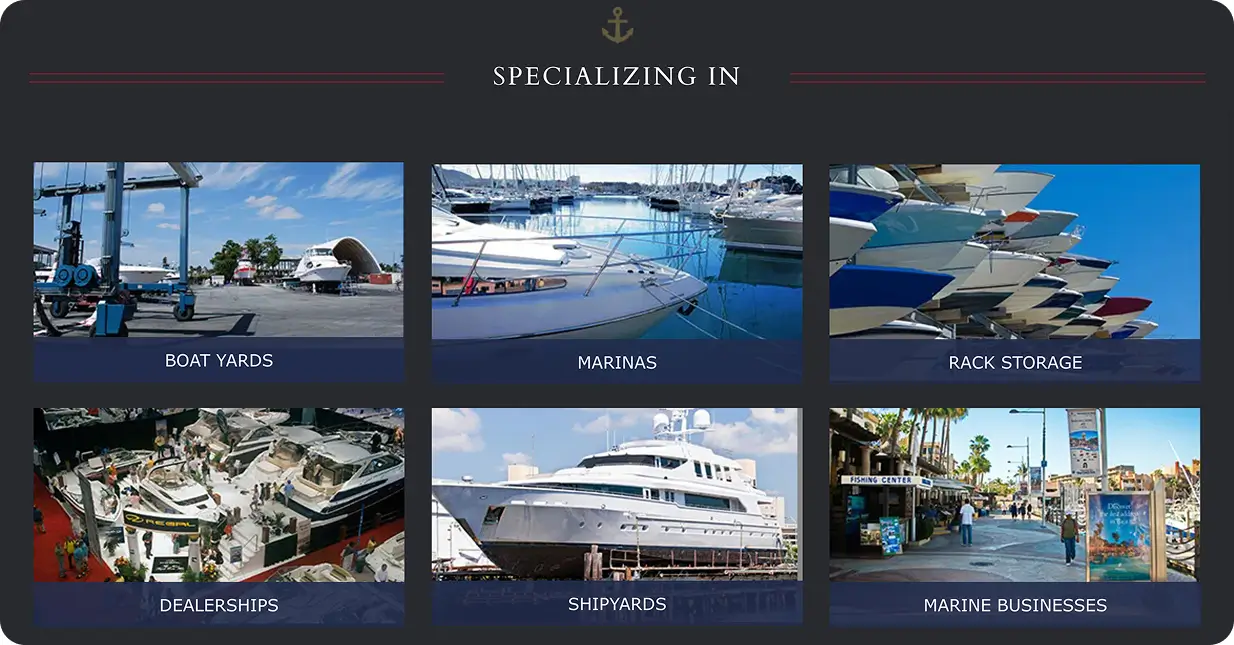
National Marina Sales is a commercial brokerage specializing in the sale of marinas, boatyards, shipyards, dry rack storage, dealerships, and marine businesses across the United States. Led by a commercial maritime broker with decades of hands-on industry experience, the firm advises owners and buyers through one of the largest financial decisions of their lives.
The Challenge
Buyers and sellers now ask AI assistants the same questions they once typed into Google: what a marina is worth, how to sell one, what to check before buying. National Marina Sales had authoritative answers to all of them — but the pages were written in a format AI systems struggle to extract. Direct answers were buried, facts were scattered through long paragraphs, and there was no clear question-and-answer structure. On the queries that matter most to the business, AI search engines were citing competitors instead.
We rebuilt three high-intent commercial pages around how large language models actually read a page and decide what to quote. Within a single month, AI impressions across those pages grew 4.3× — with the strongest page climbing 18×.
We selected one page for each core commercial intent: marina valuation, selling a marina, and buying a marina. These are reference-style questions — “how much is it worth,” “how do I sell,” “how do I buy” — where AI search engines assemble a detailed answer from whichever sources are easiest to extract from. Those answers were already being generated for our client’s core topics; they simply pointed to competitors.
We rewrote and restructured the content page by page. Every meaningful section now opens with a direct answer, so a model can take the substance without parsing the full page. Content was broken into short, self-contained blocks on a one-question-one-answer basis, matched to how people actually phrase their queries. We added the specifics AI cites far more readily than general commentary — numbers, ranges, decision criteria, step-by-step actions, and industry benchmarks.
We cut filler paragraphs that carried no substance and reduced every topic to a self-sufficient, quotable passage. Key facts were reformatted so machines read them unambiguously. The result: each page now hands the model a ready, accurate answer to a core industry question — and becomes the convenient source to cite.
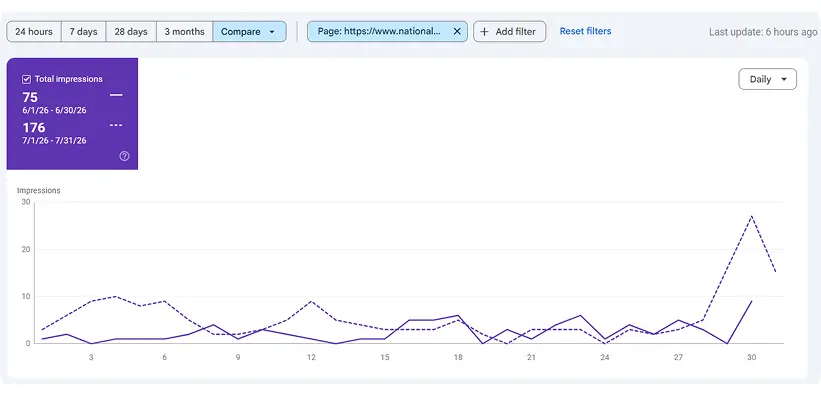
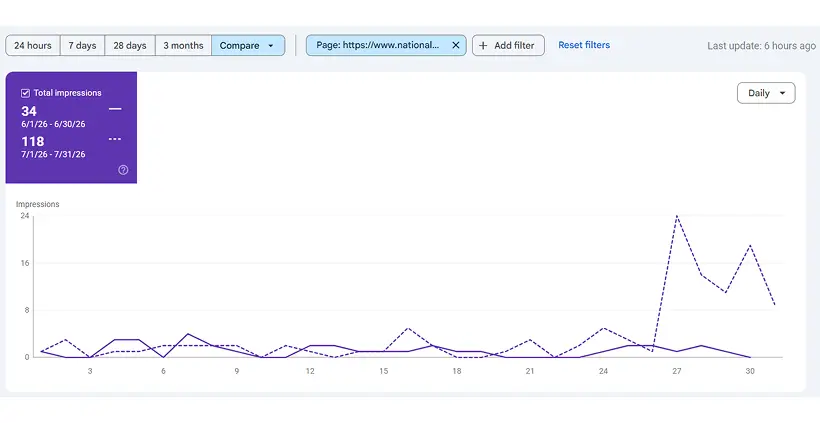
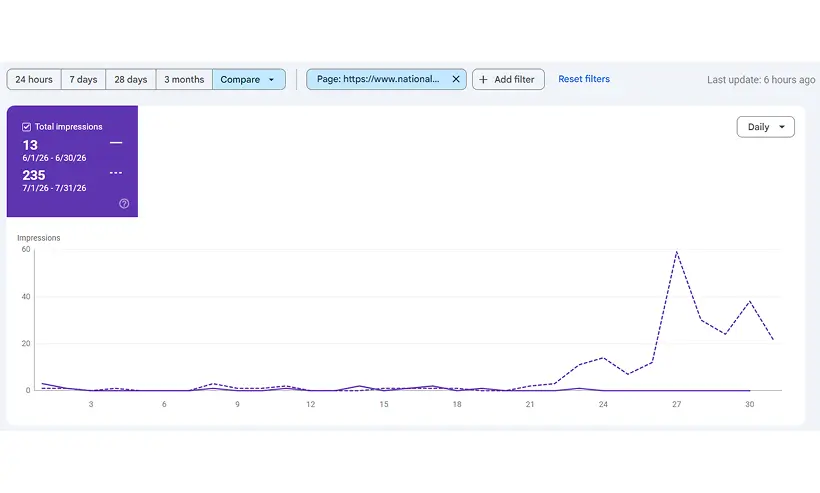
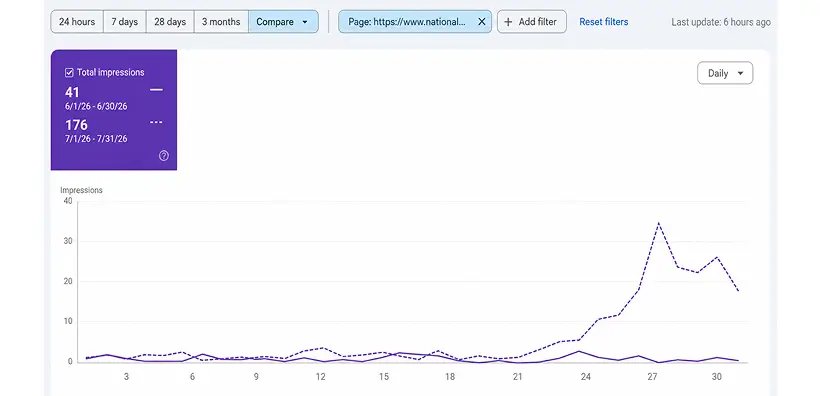
We measured AI impressions in Google's Generative AI features report, comparing June to July on each page. Every page we touched grew, and all three climbed in sync — with a sharp rise from the second half of July, immediately after the changes went live.
The valuation page grew from 13 to 235 AI impressions — an 18× increase
The "how do I sell a marina" page rose from 34 to 118 AI impressions — 3.5×
The "buy a marina" page rose from 75 to 176 AI impressions — 2.3×
Combined AI impressions across the three pages went from 122 to 529 in a single month — 4.3× growth
The increase lines up precisely with the implementation date across all three pages
Growth rests on the structure of the content itself, not a one-time spike — and the same approach applies to every other commercial and informational page on the site